Capital Planning is a Necessity
The infrastructure crisis everyone is starting to notice was built one deferred decision at a time. And the profession that has been quietly solving this problem for decades works at the scale of a condominium association, not a state highway system.
I have spent most of my career at the intersection of policy, industry, and the consequences of decisions that governments and organizations defer for too long.
I started in the offices of Senator John McCain and Congresswoman Debbie Lesko — tracking legislation, fielding constituent concerns, watching how policy decisions made in Washington rippled outward into real communities. Later, I led government affairs for a major defense technology company, built coalitions, represented hundreds of defense contractors, and worked with U.S. and foreign officials on infrastructure and national security policy across multiple sectors.
And then I spent time working directly in Ukraine.
What I saw there — the ambition of what needs to be rebuilt, the sheer scale of restoring critical systems for an entire nation — reframed how I think about infrastructure planning everywhere. Ukraine faces a capital planning challenge of historic proportion, and how that rebuilding is approached will shape communities for generations.
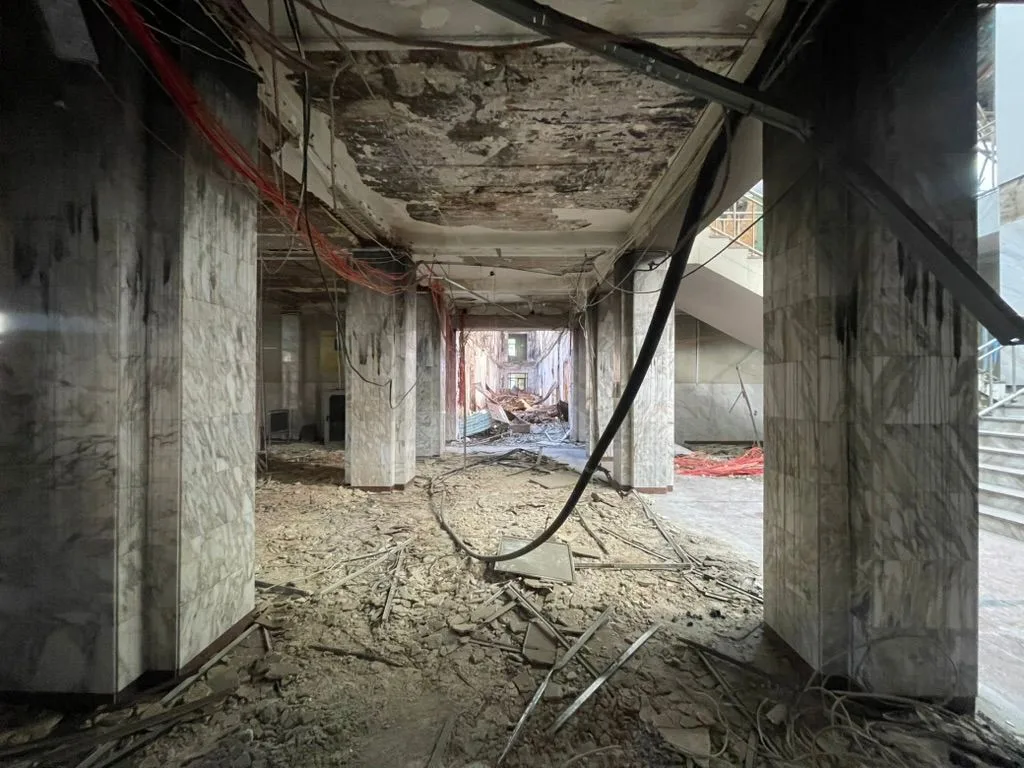
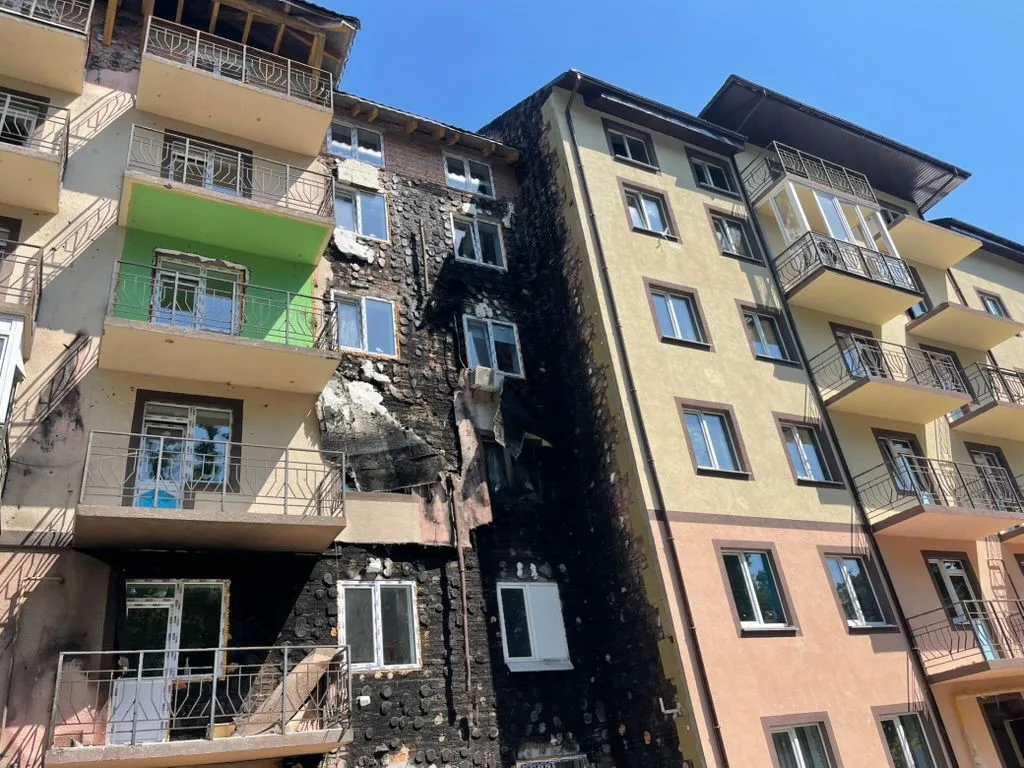
It is an extreme and urgent version of a challenge that exists closer to home too. The need for accurate, forward-looking capital planning does not begin at national scale — it shows up in every city budget, every aging bridge, every community that has deferred the hard conversation about what maintaining their assets actually costs.
The question is whether we take that seriously before we are forced to.
The Cost of Deferral Is Not Hypothetical
In 2022, the American Society of Civil Engineers gave U.S. infrastructure a C- grade, estimating a $2.6 trillion funding gap over ten years. Bridges are deteriorating. Water systems are aging past their design life. Roads that should have been maintained a decade ago now require full reconstruction at multiples of the original cost.
This is not fundamentally a funding problem. It is a planning problem. The money was never set aside because the frameworks to make those long-term obligations visible — and actionable — were never put in place.
I have seen this dynamic play out in defense procurement, in municipal budget cycles, in state legislative sessions where officials are asked to fund emergency repairs on assets that should never have reached emergency condition. The pattern is consistent. The planning horizon was too short. The obligation was invisible until it became urgent.
Florida Saw It Coming — And Acted With Reserve Study Legislation
In the aftermath of the Champlain Towers collapse in Surfside, Florida, which killed 98 people in 2021, the state legislature did something most states have not yet done: it made proactive capital planning a legal requirement.
Florida’s Structural Integrity Reserve Study legislation now mandates reserve studies and non-waivable reserve funding for condominiums three stories and taller. Board members carry personal liability for non-compliance. Lenders are tightening requirements. Insurance carriers are scrutinizing reserve adequacy in ways they never previously did.
Florida did not create a new idea. It created a new requirement around a practice that reserve planning professionals have been advocating for decades. What changed was not the methodology — it was the legal and financial consequence of ignoring it.
More than 30 states now have some form of reserve study or reserve fund legislation on the books. The direction of travel is clear. What is less clear is whether the industry has the infrastructure — the tools, the systems, the scalable capacity — to meet the demand that regulation is creating.
That gap is exactly why EZRS exists. John Zanni wrote about why he built this company. Hannes Migga-Vierke wrote about how the team is building it. My perspective is about what happens when the policy environment outpaces the tools available to respond to it.
Reserve Professionals Have Been Right All Along
Here is something the broader infrastructure and policy world has not fully recognized: the reserve planning profession has been quietly solving this problem at the community level for decades.
Reserve management companies, independent reserve specialists, and property managers have been doing the unglamorous, essential work of making long-term capital obligations visible and actionable. EZRS brings that same depth of practice to its foundation — with 36 years of industry experience informing how we think about what this work actually demands.
Every reserve study completed, every funding plan presented to a skeptical board, every special assessment avoided because someone planned ahead — that is proactive infrastructure stewardship. It just happens to occur at the scale of a condominium association or an HOA rather than a state highway system.
The principles are identical. Inventory your assets. Assess their condition. Model their useful life. Project their replacement cost. Fund the obligation before it becomes urgent.
What the reserve planning profession has demonstrated — and what the broader infrastructure world is still working to operationalize — is that this framework works. It reduces the cost of deferred maintenance. It creates financial predictability. It protects the people who live and work in the assets being planned for.
The question is not whether this approach is right. The question is whether it can scale.
Smarter Planning Is a National Issue — And It Starts at Home
The reserve planning profession is at an inflection point that mirrors moments I have watched unfold in defense and federal policy. The regulatory environment is tightening. Scrutiny from lenders, insurers, and legislators is increasing. The volume of assets requiring professional-grade capital planning is growing faster than the current capacity of the profession can absorb.
At the same time, the tools available to reserve professionals have not kept pace with the demands being placed on them. Specialists managing growing portfolios are still rebuilding analyses manually. Reserve management companies are enforcing methodology consistency across dozens of specialists with processes that do not scale. The documentation burden is increasing at exactly the moment when capacity is most constrained.
This is a solvable problem. Technology has expanded professional capacity in every comparable field — legal, financial, engineering — without replacing the judgment that defines the quality of the work. The same shift is available to reserve planning. It requires tools built with genuine understanding of what the work demands.
That is what we are building at EZRS. Not a shortcut. Not a replacement for the specialist. AI-augmented reserve study software that handles the repeatable so the specialist can focus on the irreplaceable — and that grows in capability as the regulatory and market environment continues to evolve.
The Stronger Communities We Are Planning For
When I think about why this work matters beyond the immediate market we are building in, I keep coming back to something that connects every role I have had — in congressional offices, in defense industry coalitions, in policy work across multiple continents.
Strong communities do not happen by accident. They are planned for. The roads that hold, the bridges that last, the buildings that do not surprise their residents with a catastrophic assessment — behind every one of those outcomes is a planning decision that someone made, funded, and maintained over time.
The reserve planning profession is proof that this is possible at the community level. The policy environment is beginning to demand it more broadly. The technology to support it at scale now exists.
Smarter planning builds stronger communities. That is not a tagline. It is the entire argument.
The Conversation We Need to Have
If you work in reserve planning, property management, or community association management — or if you work in policy and are thinking about what proactive capital planning infrastructure should look like at scale — I would welcome the conversation.
We are building in partnership with the industry. We are paying close attention to where the policy environment is heading. And we believe the reserve planning profession deserves tools that match the importance of the work.
Book a 30-minute discovery call at ezrs.com/contact
Frequently Asked Questions
What is a reserve study?
A professional assessment of a property’s physical assets and long-term capital needs — documenting condition, useful life, and replacement costs, with a funding plan to match.
What is the difference between a reserve study and a reserve fund?
The reserve study is the plan. The reserve fund is the money set aside to execute it.
Is a reserve study legally required?
It depends on your state. Florida now mandates them following the Surfside collapse, and more than 30 states have some form of reserve legislation. The regulatory direction is toward broader requirements.
What happens if a community doesn’t fund its reserves?
Deferred funding leads to special assessments — large, unplanned charges to owners when a major repair can no longer be avoided.
About Easy Reserve Study (EZRS)
Easy Reserve Study® (EZRS®) is AI-augmented reserve study software for smarter capital planning. Built for reserve management companies, independent reserve specialists, property managers, HOAs, vacation clubs, and institutional operators — EZRS replaces static spreadsheets and fragile manual processes with a continuously updated, living system of record.
We are building in active partnership with the reserve planning industry. If you are a reserve professional curious about what we are working on, we would welcome the conversation.
Book a discovery call at ezrs.com/contact