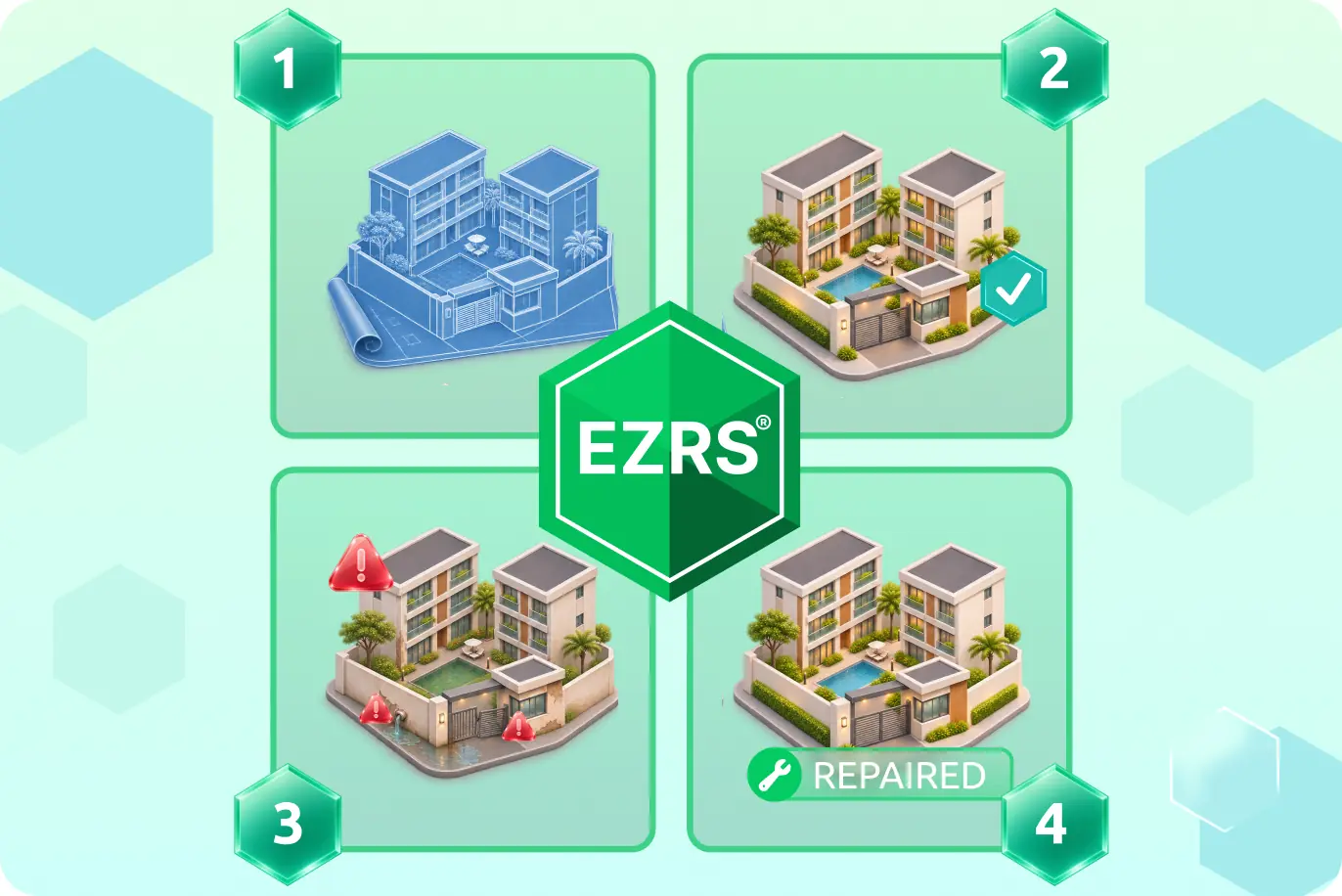


The contractor needs payment in March. The reserve plan looks comfortable in December. Can the association cover the bill when it arrives?
Suppose an association begins January with $100,000 in reserves and adds $10,000 each month. A $150,000 repair bill is due at the end of March.
By the payment date, three monthly contributions have added $30,000. The association has $130,000 available, leaving a $20,000 shortage.
Looking only at the year-end balance hides the problem. After all 12 monthly contributions and the repair payment, $70,000 would remain. The example leaves out interest and other expenses to show why payment timing matters.
A monthly cash flow projection reveals the shortage before the payment is due. Updating the projection between professional reserve studies helps managers check whether the plan still covers upcoming bills.
Follow the Money Through the Year
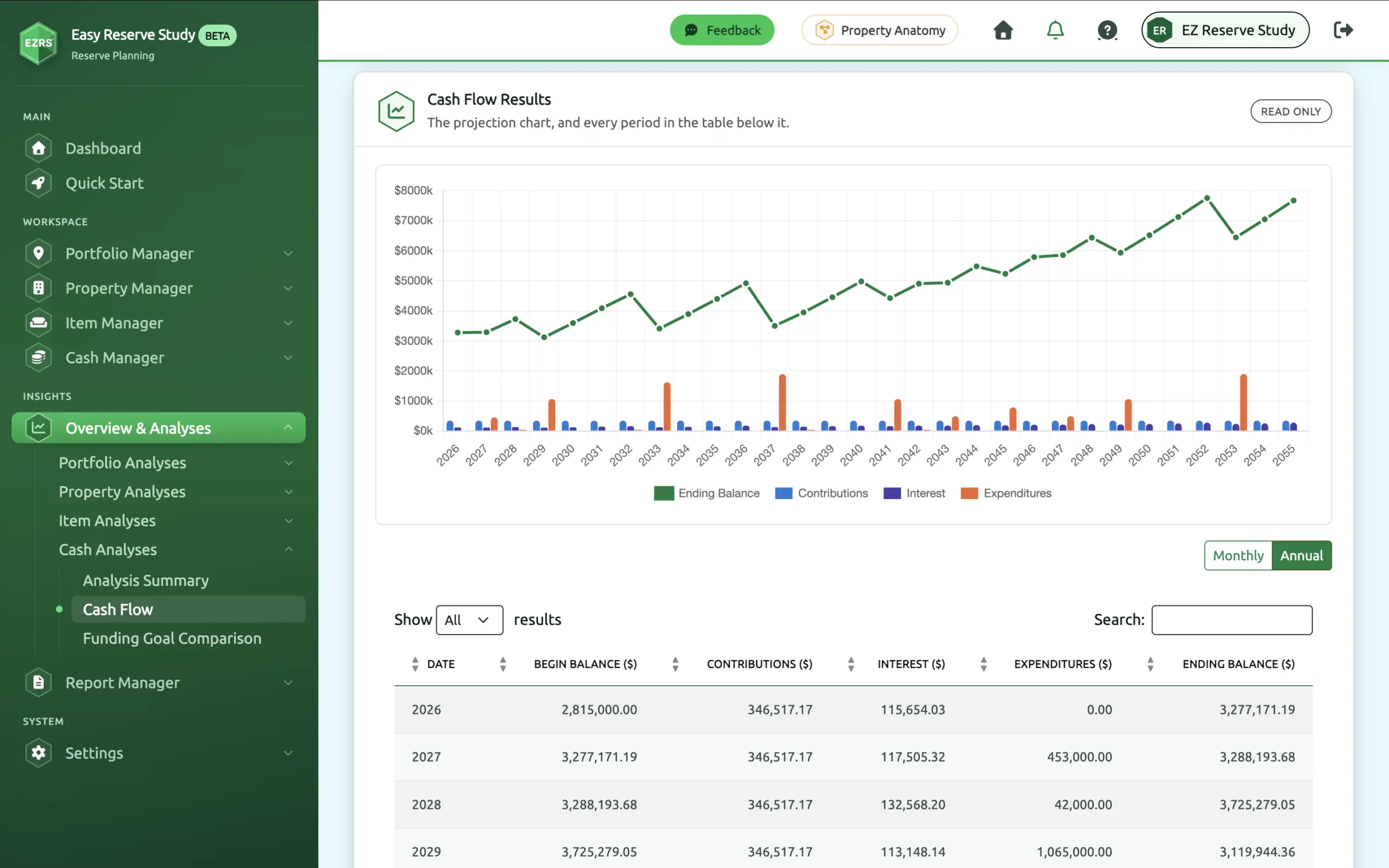
Easy Reserve Study® (EZRS®) uses the cash flow method to show how the reserve balance changes as money comes in and repair bills are paid. Managers can update the figures between studies as costs, balances, and schedules change.
The calculation starts with the repairs and replacements in the plan: their estimated costs and when the work is expected. Inflation assumptions help estimate what each job may cost by the time it is needed.
For each month, EZRS starts with the reserve balance, adds planned contributions and expected interest, then subtracts scheduled repair and replacement costs. The money left becomes the starting balance for the following month. Repeating the calculation shows when the fund may run short, including shortages a year-end total can hide.
A funding goal sets the target for the plan. For a minimum-balance goal, EZRS calculates the lowest contribution that keeps the projected balance at or above the target. The board and its reserve professional decide which goal the plan should use. If a contractor moves the work up a year, the manager can update the schedule and check whether more money is needed sooner.
When the Roof Needs Replacing Sooner
Property conditions can change between studies, too. Suppose an inspection finds a roof expected to last another eight years will need replacement in four.
Moving the roof replacement four years earlier changes the funding picture. Fewer years remain to collect contributions and earn interest. Fewer years of inflation may also reduce the estimated cost. The revised calculation shows how the changes affect funding.
Keeping the plan current lets the manager test the change before the board meets. In a cash flow scenario, the manager can move the roof replacement earlier, try a higher contribution and compare the result with the study on record, year by year. The board can consider a contribution adjustment at the next budget meeting with the roof’s shorter life reflected in the figures.
When Major Projects Overlap
Suppose a contractor’s revised schedule moves parking-lot resurfacing into the same year as roof replacement. Each project might be affordable alone, but both need money from the same reserve fund.
Moving the resurfacing into the roof’s year puts both bills in the same year of the projection. The manager can see whether the balance falls below the funding target and test a higher contributions or a special assessment. If a qualified professional determines that one project can be rescheduled, a separate scenario can show how moving the payment affects the balance.
Reviewing schedule changes between studies gives the board time to consider funding both projects before the association commits the money.
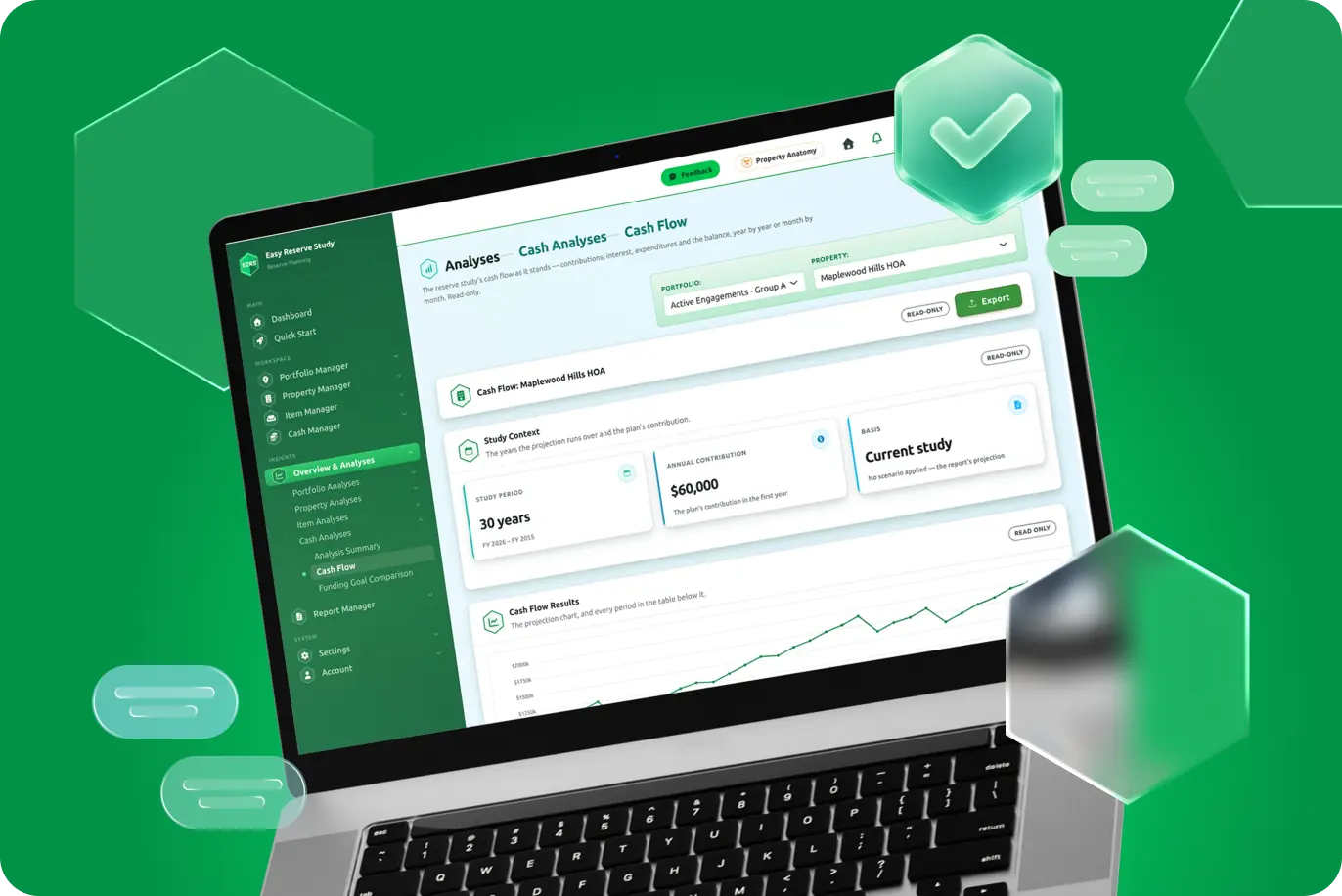
Screenshot of EZRS® Web’s Cash Flow Analysis Application
Bring the Funding Decision to the Board
A reserve study provides the starting point. Updating costs, balances and repair dates between studies helps managers bring current funding options to the board. The association and its reserve professional choose the assumptions and funding goal. EZRS shows how the choices affect the projected balance. Testing a scenario leaves the underlying study unchanged, and EZRS does not replace a professional reserve study.
Explore how EZRS supports reserve management and capital planning.
About Easy Reserve Study (EZRS)
EZRS® makes reserve management and capital planning easy—from collecting and managing data to building plans and keeping them current between studies. Built for property management companies, resort management companies, reserve professionals, and the boards they serve, EZRS® brings reserve data, funding scenarios, budgets, and board-ready reports into one platform.